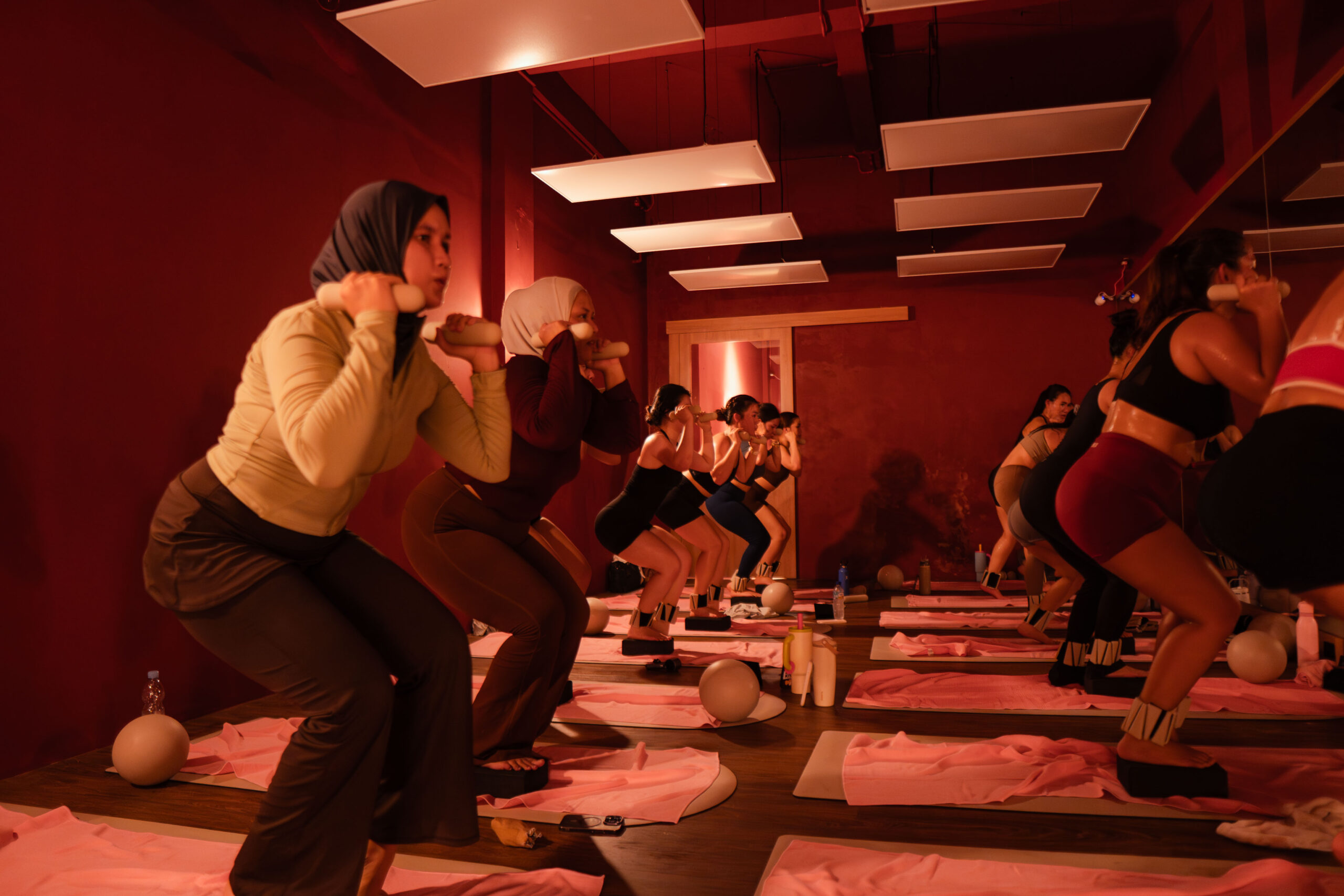
You may have heard of Hot Infrared Pilates and wondered what actually happens inside a heated studio. Is it simply regular Pilates with more sweat, or does the infrared heated environment change the way the class feels?
Hot Infrared Pilates is a mat based Pilates workout performed in a heated infrared studio. It combines controlled Pilates movements with a warm environment designed to create a different class experience from Pilates performed in a typical indoor room.
The movement remains central to the workout. The heat is part of the setting, not a replacement for good technique, thoughtful pacing, appropriate modifications, or body awareness. Some people enjoy the warmth and focused atmosphere, while others may need time to understand how their body responds to exercising in a heated room.
It is useful to think of Hot Infrared Pilates as a movement practice rather than a guaranteed shortcut or quick fix. The experience can vary depending on the class format, instructor, studio temperature, duration, exercise sequence, and individual comfort with heat.
What Makes Hot Infrared Pilates Different?
The main difference is the studio environment.
Traditional Mat Pilates can be performed in a room at a typical indoor temperature. Hot Infrared Pilates takes place in a deliberately heated studio, where infrared heating is part of the environment surrounding the class.
The infrared element should not be understood as a guarantee of specific health, fitness, weight-loss, or recovery results. In this context, it is part of the way the studio is heated and contributes to the overall sensory experience of the session.
The warmer room may influence how your body feels during movement, how quickly you begin to sweat, and how carefully you need to manage your effort and hydration. A familiar exercise may feel different when performed in a warm environment, even though the basic movement remains the same.
A useful analogy is walking the same route on a cool morning and on a warm afternoon. The route may be identical, but your experience of breathing, effort, temperature, and the need for water may change. Hot Infrared Pilates works in a similar way: the Pilates-based movement provides the structure, while the heated environment adds another layer to the experience.
Traditional Pilates places emphasis on controlled movement, breathing, concentration, alignment, and coordination. Hot Infrared Pilates keeps that movement focused foundation while adding a warm studio setting.
If you are comparing the heated experience with non heated mat movement, read Hot Infrared Pilates vs Mat Pilates: What’s the Difference? for a closer look at the infrared heated environment, movement experience, intensity, and class structure.
What Happens During a Hot Infrared Pilates Class?
Every studio and instructor may structure classes differently, so there is no single routine that every Hot Infrared Pilates class follows. The temperature, duration, exercises, pacing, and class emphasis can all vary.
A typical session may include the following stages:
- Arrival and setup
You place your mat, get comfortable in the studio, and keep water nearby. - Warm up
The instructor may guide you through breathing, gentle mobility, and simple movement patterns to prepare your body. - Main movement sequence
You work through controlled mat exercises that may involve the core, legs, glutes, arms, shoulders, or whole body. - Strength and endurance work
Repeated movements, holds, pulses, and transitions may gradually challenge your control and muscular endurance. - Cooldown
The pace slows so you can breathe, release tension, and notice how your body feels after moving in the heat.
The sequence may include exercises performed lying down, seated, kneeling, or standing. You may move between positions or repeat a movement several times to develop familiarity and control.
The goal is not necessarily to move as quickly as possible. An instructor may encourage you to slow down, reduce your range of motion, or choose a modification so you can maintain better control.
For a closer look at how a Hot Infrared Pilates class moves from arrival and warm-up through the main movement sequence and cooldown, read How Does Hot Infrared Pilates Work? What to Expect in a Class.
What Kind of Movements Are Included?
Hot Infrared Pilates uses Pilates based mat movements and bodyweight resistance. Depending on the class format, you may work through exercises involving:
- Core control
- Lower body strength
- Glute activation
- Arm and shoulder stability
- Hip and spine mobility
- Balance and coordination
- Muscular endurance
- Controlled stretching and release
A movement may look simple but still require concentration. The challenge can come from maintaining a position, controlling the pace, coordinating your breathing, or repeating an exercise without losing alignment.
For example, a bridge sequence may involve lifting and lowering the hips with control. A side-lying exercise may require you to stabilise your pelvis while moving one leg. A plank variation may involve maintaining a steady trunk while breathing and managing the position of the shoulders.
You do not need to perform every exercise at the largest range of motion or the most advanced level. A smaller, controlled movement can be a more appropriate choice than forcing a position that does not feel manageable.
Why Do People Try Hot Infrared Pilates?
People attend Hot Infrared Pilates for different reasons.
Some enjoy the structure of a guided mat workout. Others want to explore controlled movement, build a more consistent exercise routine, or experience a boutique fitness class in a warm studio environment.
Some participants may be interested in strength, mobility, balance, coordination, or body awareness. These qualities are connected primarily to the Pilates based movements, the way they are performed, the instructor’s guidance, and consistency over time not to infrared heat alone.
The potential movement related outcomes of Hot Infrared Pilates will vary from person to person. Goals, previous exercise experience, class frequency, movement quality, recovery, and individual response can all influence the experience.
If you want to explore these potential movement-related outcomes in more detail, read What Are the Benefits of Hot Infrared Pilates?.
Is Hot Infrared Pilates Suitable for Beginners?
For many people, a beginner friendly class can provide an accessible introduction to Pilates-based movement. You do not necessarily need previous Pilates experience to learn the basic exercises.
An instructor may demonstrate the movements, explain the setup, offer modifications, and help you find a pace that feels manageable. You may also be able to adjust the range of motion, take a short pause, or rest in a comfortable position when needed.
If you are new to heated workouts, it is normal to wonder whether you will be able to keep up. Try to treat your first session as an introduction rather than a test. Focus on understanding the movement, breathing steadily, and noticing how the heated environment feels.
You do not need to match the pace or range of motion of another participant. People may have different movement histories, levels of experience, and responses to heat.
How Should You Prepare for Your First Class?
A little preparation can make your first Hot Infrared Pilates experience more comfortable.
Before Class
- Drink water throughout the day instead of waiting until you feel thirsty.
- Arrive around 10-15 minutes early so you can check in and settle into the studio.
- Wear comfortable, breathable clothing that allows you to move freely.
- Avoid arriving immediately after a very heavy meal.
- Let the instructor know if you have an injury, health concern, or movement limitation.
- Bring or prepare anything the studio recommends, such as water or a towel.
During Class
- Keep water within reach.
- Move at a pace you can control.
- Take a break or choose a modification when necessary.
- Pay attention to dizziness, unusual weakness, nausea, confusion, or feeling faint.
- Stop and ask for guidance if an exercise feels painful or unmanageable.
- Avoid treating the heat or sweat level as a measure of success.
After Class
- Cool down gradually.
- Drink water and give yourself time to adjust to the change in temperature.
- Notice how your body feels later in the day, not only how much you sweated.
- Give yourself time to understand your response before increasing frequency or intensity.
The Centers for Disease Control and Prevention advises people exercising in hot conditions to drink more water than usual, pace their activity, and stop if they feel faint or weak.[1]
Is the Heat Safe for Everyone?
Heated exercise is not automatically suitable for every person. If you are pregnant, have a cardiovascular condition, have a history of heat related illness, or have another medical concern, speak with an appropriate healthcare professional before joining a heated class.
People respond to heat differently. A room that feels manageable to one person may feel intense to another. Your response can also be affected by hydration, recovery, medication, previous heat exposure, and the duration or intensity of the class.
During a session, listen to your body rather than trying to prove that you can stay in the room or complete every sequence. Feeling lightheaded, dizzy, confused, unusually weak, nauseated, or unwell is a reason to stop, move to a cooler place, and seek help when appropriate.
The American College of Sports Medicine recommends paying attention to hydration and symptoms of heat stress, and reducing exercise intensity or duration when the body is not accustomed to a hot environment.[2] The goal is not to push through warning signs. A positive workout experience includes knowing when to adjust, rest, or stop.
For additional practical information about class participation and studio policies, see Sama Sculpt’s Hot Pilates FAQ.
Quick Checklist: Could Hot Infrared Pilates Fit Your Routine?
Hot Infrared Pilates may be worth exploring if you are looking for:
- A guided, mat based workout
- Controlled movement rather than high impact exercise
- More focus on strength, mobility, balance, or body awareness
- A class that can be adapted to different experience levels
- A warm studio environment that feels motivating to you
- A movement practice you can enjoy returning to
It may not be the right choice if you strongly dislike heat, have been advised to avoid heated exercise, or are looking for a purely cardiovascular workout.
The best class is not necessarily the hardest one. It is the one you can approach safely, enjoy, and fit into your wider routine.
What Should You Expect From Your First Hot Infrared Pilates Session?
Expect to learn. You may notice the heat relatively quickly, and some movements may require concentration as you coordinate breathing, posture, balance, and transitions.
The instructor may offer different options for an exercise. You can ask questions, reduce your range of motion, take a pause, or return to a simpler version when needed. Your first class does not need to be a test of how much heat or intensity you can tolerate.
At Sama Sculpt, the class format depends on the experience you choose. Booty Sculpt focuses on lower-body strength and endurance. Hot Mobility centres on range of motion, flexibility, and release. Sculpt & Glow brings together flowing, full-body sequences in the heat.
When you are ready to explore the available formats, visit Sama Sculpt’s Hot Infrared Pilates Classes and consider which experience best matches your goals and preferred way of moving.
Hot Infrared Pilates is a Pilates based mat workout performed in a heated infrared studio. The warmth may make the session feel different from non-heated Pilates, but the quality of the movement still depends on controlled technique, appropriate pacing, hydration, instructor guidance, and listening to your body.
You do not need to arrive perfectly prepared or already know how to perform every exercise. Start at your own pace, ask questions, and give yourself time to understand how the environment and movements feel. As with any heated exercise, stop if you feel unwell and seek appropriate guidance if you have health concerns.
Footnotes
- Centers for Disease Control and Prevention. “Heat and Athletes.” Guidance includes pacing activity, drinking more water than usual, and stopping if feeling faint or weak. https://www.cdc.gov/heat-health/risk-factors/heat-and-athletes.html
- American College of Sports Medicine. “Exercising in Hot and Cold Environments.” The guide covers hydration, heat-stress symptoms, pacing, and reducing exercise intensity or duration when adapting to heat. https://acsm.org/wp-content/uploads/2025/02/Exercising-in-Hot-and-Cold-Environments.pdf