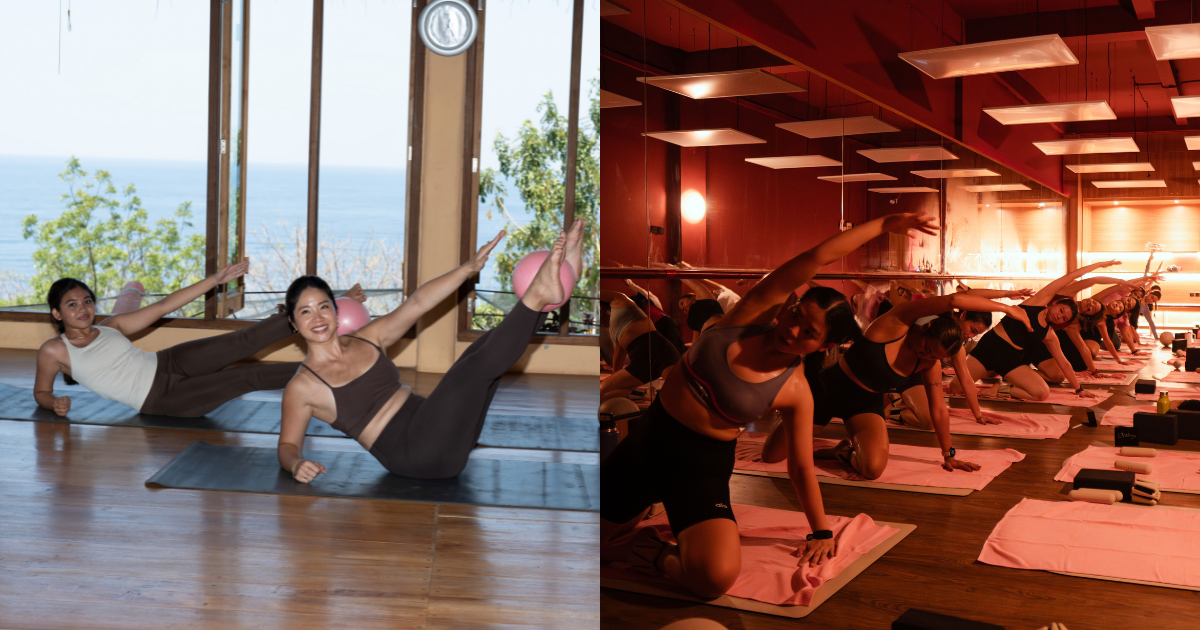
You may be familiar with Mat Pilates but still wonder how Hot Infrared Pilates compares. Since both formats use a mat and Pilates based movement, is the main difference simply the temperature of the room?
The short answer is that Hot Infrared Pilates and Mat Pilates share many of the same movement foundations, but Hot Infrared Pilates adds a heated infrared studio environment. Both may involve controlled exercises, breathing, core control, bodyweight resistance, mobility, balance, and concentration.
The heated environment can change how the class feels, how quickly you sweat, and how you manage your effort. However, it does not automatically make every movement more effective or guarantee a particular physical result.
Neither format is universally better. The right choice depends on your goals, preferred environment, comfort with heat, movement experience, and the type of class you are most likely to enjoy consistently.
What Do Hot Infrared Pilates and Mat Pilates Have in Common?
Both Hot Infrared Pilates and Mat Pilates use a mat as the main training surface. Exercises are generally performed using bodyweight resistance rather than large machines or heavy external equipment.
Both formats may include movements that challenge:
- Core control
- Stability
- Strength
- Muscular endurance
- Mobility
- Flexibility
- Balance
- Coordination
- Body awareness
The focus is usually not on moving as quickly as possible. You may be asked to control each repetition, coordinate your breathing, maintain alignment, and move through a range of motion that feels manageable.
For example, a bridge, plank variation, side lying leg exercise, or controlled abdominal sequence could appear in both formats. The exercise itself may be similar, although the room, pacing, instructor style, and overall sensation may differ.
Research on Pilates commonly discusses controlled movement, breathing, strength, endurance, flexibility, posture, and balance, while also noting that the available evidence varies across different outcomes.[1]
If you would like a general introduction to the heated format before comparing it with Mat Pilates, read What Is Hot Infrared Pilates? A Beginner-Friendly Guide to Heated Pilates.
What Is the Main Difference Between Hot Infrared Pilates and Mat Pilates?
The main difference is the environment in which the mat workout takes place.
Mat Pilates generally takes place in a regular indoor studio or room. The movement experience is influenced mainly by the exercises, sequence, instructor guidance, bodyweight resistance, and the way each movement is performed.
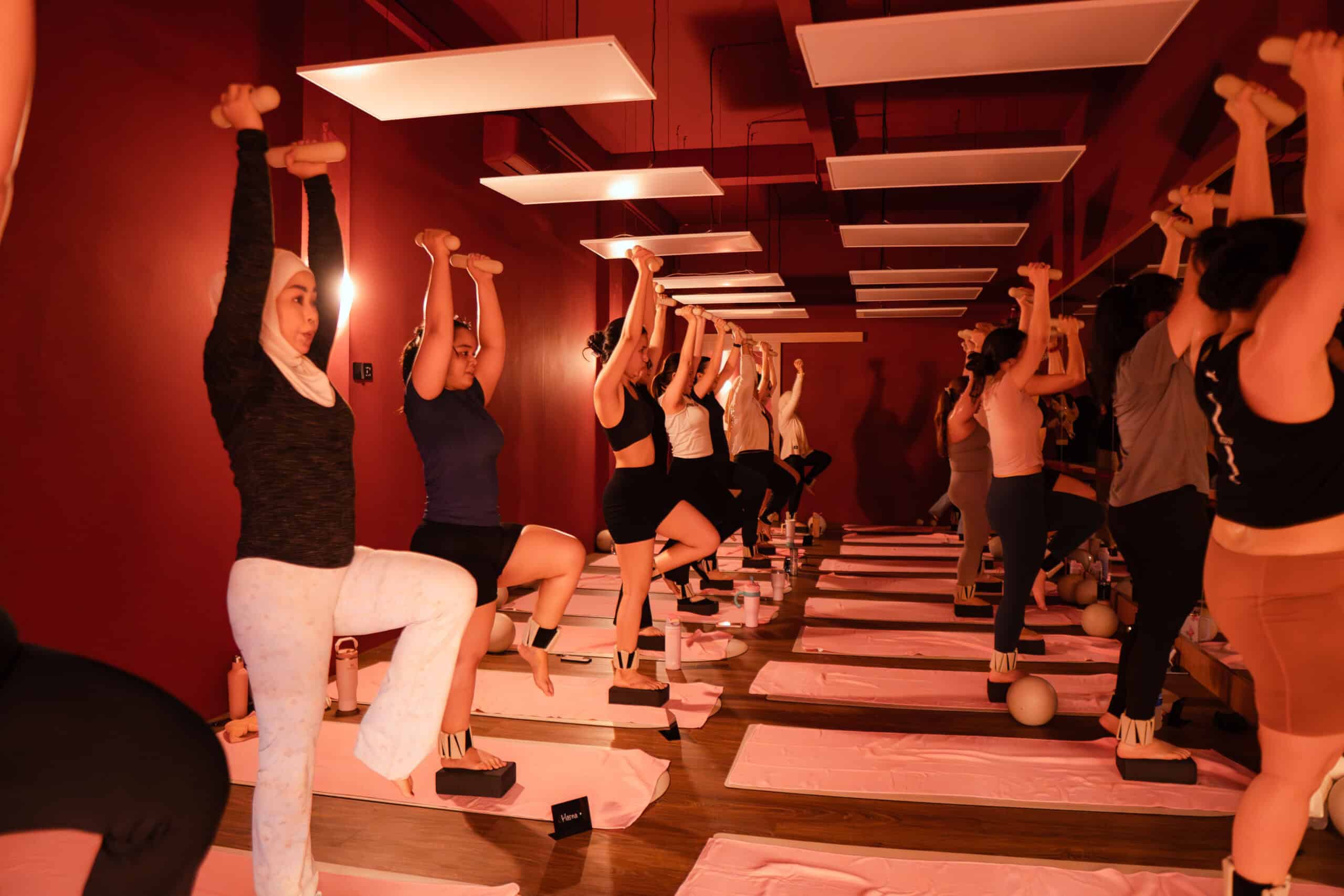
Hot Infrared Pilates takes place in a deliberately heated studio, where infrared heating is part of the environment surrounding the class. The Pilates based mat exercises remain central, but warmth becomes another part of the overall experience.
The infrared element should not be treated as a guarantee of specific health, fitness, weight loss, recovery, or medical benefits. In this context, it describes part of the way the studio is heated and may influence how the session feels.
A simple way to think about the difference is to imagine taking the same walk on a cool morning and on a warm afternoon. The route may be identical, but your experience of breathing, effort, temperature, sweating, and the need for water may change.
Hot Infrared Pilates works in a similar way. The movement provides the structure, while the heated environment adds another factor to manage.
How Does the Heated Infrared Environment Change the Experience?
The warmth may affect how quickly you begin to sweat and how physically demanding the class feels. Some people enjoy the immersive quality of exercising in a heated studio, while others prefer a more temperature neutral setting.
During Hot Infrared Pilates, you may become more aware of:
- How quickly your body warms up
- How much fluid you need
- How your breathing feels during effort
- Whether your pace remains manageable
- When you need to pause or modify a movement
- How your body responds to the room temperature
Mat Pilates can still be physically challenging, but the room temperature is less likely to be a central part of the workout experience. The challenge may come more directly from exercise selection, repetition, body position, balance, and movement control.
This does not mean Mat Pilates is always easier or that Hot Infrared Pilates is always more intense. A demanding Mat Pilates class can require considerable strength and concentration, while a Hot Infrared Pilates class can be adjusted to different levels of effort.
For a broader explanation of how the infrared environment influences the class, read How Does Hot Infrared Pilates Work? What to Expect in a Class.
Does Hot Infrared Pilates Feel More Intense Than Mat Pilates?
It may feel more intense, but perceived intensity and movement quality are not the same thing.
The heat can make you feel warmer and may cause you to sweat sooner. You may also notice the effort of holding a position or repeating a movement more strongly as the class continues.
However, the sensation of sweating does not tell you everything about the quality of a workout. More sweat does not automatically mean greater progress, more fat loss, more calories burned, or better results.
Mat Pilates can also feel challenging when an exercise requires you to stabilise your trunk, control your limbs, maintain balance, or repeat a movement with precision. The difficulty may be less noticeable because it is not combined with a heated environment.
The most useful level of intensity is one that allows you to remain aware of your breathing and movement. If you feel faint, weak, dizzy, confused, nauseated, or unwell during exercise in heat, stop the activity and move to a cooler place.
Guidance from the Centers for Disease Control and Prevention recommends pacing activity, drinking more water than usual, and stopping if you feel faint or weak when exercising in hot conditions.[2]
Are the Movement Benefits Different?
Hot Infrared Pilates and Mat Pilates can both provide opportunities to practise strength, core control, mobility, flexibility, balance, coordination, posture awareness, and body awareness.
The main difference is not that one format has access to movement qualities that the other cannot offer. Instead, the environment may influence how the workout feels and how you manage your effort.
For example, a controlled bridge sequence can challenge the hips and trunk in either format. A plank variation may require core control in both settings. A mobility sequence may involve the shoulders, spine, or hips whether the room is heated or not.
The potential outcomes depend on how the exercises are performed, how regularly you practise, your previous movement experience, the instructor’s guidance, and how the session is adapted to you.
Heat may influence the sensory experience, but it is not the sole explanation for potential movement-related outcomes. The Pilates-based exercises and the quality of practice remain central.
For a closer discussion of strength, core control, mobility, flexibility, balance, posture, and body awareness, read What Are the Benefits of Hot Infrared Pilates?.
How Are the Class Experiences Different?
Although both formats are mat-based, the overall class experience may have a different rhythm.
Mat Pilates may offer a more temperature-neutral environment in which you can focus primarily on movement, instructor cues, breathing, and alignment. Some people appreciate this because their perceived effort is influenced mainly by the exercise itself.
Hot Infrared Pilates may feel more immersive because the room becomes part of the experience. The warmth can make the class feel distinct, and some participants enjoy combining controlled movement with a heated environment.
The class structure can vary in both formats. One Mat Pilates class may focus on slower, precise exercises, while another may include a flowing sequence. A Hot Infrared Pilates class may include strength-focused repetitions, mobility work, or full body movements depending on the class format.
This is why it is useful to look beyond the label. The instructor, exercise sequence, class length, room temperature, and studio approach can all influence what the experience feels like.
How Do Pacing and Movement Modifications Differ?
Pacing is affected by the exercises in both formats, but the heated environment may make pacing more noticeable during Hot Infrared Pilates.
In Mat Pilates, you may adjust your effort by reducing your range of motion, taking a pause, or choosing a simpler version of an exercise. The same options may be available in Hot Infrared Pilates, with additional attention to hydration and heat tolerance.
You may need to:
- Move more slowly
- Reduce the range of motion
- Take a short pause
- Return to a basic variation
- Rest in a comfortable position
- Ask the instructor for an adjustment
INSTRUCTOR TIP
“You don’t have to match anyone else’s pace. Find the version of the movement you can control, then build from there.”
Lusi, Sama Sculpt Instructor
A modification is not a sign that you are failing to complete the class. It is a way to keep the movement appropriate for your current ability and how your body feels that day.
The aim in either format is not necessarily to choose the hardest variation. Maintaining control and responding appropriately to your body are more useful than forcing an advanced exercise.
Which Format May Suit Your Preferences?
Hot Infrared Pilates may suit you if you:
- Enjoy exercising in a warm environment
- Like the feeling of sweating during a workout
- Want to combine Pilates based mat movement with infrared heat
- Prefer a class that feels physically immersive
- Are comfortable adjusting your pace according to your body’s response
- Enjoy the atmosphere of a heated studio
Mat Pilates may suit you if you:
- Prefer a temperature neutral environment
- Want the movement itself to be the main source of challenge
- Prefer not to exercise in heat
- Enjoy focusing on technique without an added environmental factor
- Want to explore Pilates through a traditional mat-based format
- Prefer to manage intensity without heat influencing the experience
These are not fixed categories. You may enjoy both formats at different points in your routine. Your preference may also change depending on the weather, schedule, energy level, recovery, or current goals.
How Can You Choose Between Hot Infrared Pilates and Mat Pilates?
Consider the following questions:
- Do I enjoy exercising in a warm environment?
- Am I comfortable paying closer attention to hydration and pacing?
- Do I want heat to be part of the class experience?
- Would I prefer the movement itself to be the main challenge?
- Do I enjoy repeated movements, holds, and controlled sequences?
- Which format feels more comfortable and motivating?
- Which class am I more likely to attend consistently?
- Do I have any health considerations that may affect my ability to exercise in heat?
There is no need to choose based on which format appears more difficult. A sustainable practice usually depends on finding an environment and movement style that you can approach safely and enjoy returning to.
If you have an injury, medical condition, ongoing pain, or specific rehabilitation need, seek appropriate professional guidance before starting a new exercise routine. For practical information about class participation, booking, and studio policies, see the Hot Pilates FAQ.
Which Hot Infrared Pilates Class May Match Your Goals?
Sama Sculpt offers several Hot Infrared Pilates class formats with different movement emphases.
Booty Sculpt may suit people who want to focus on lower-body strength and muscular endurance. The class may appeal to those who enjoy targeted leg and glute work with controlled repetitions.
Hot Mobility centres on mobility, flexibility, range of motion, and controlled release. It may be relevant if you want to explore movement more freely without making extreme flexibility the goal.
Sculpt & Glow offers a fuller-body movement experience that combines flowing sequences with strength, coordination, and control.
These formats are not presented as universally better than Mat Pilates. They offer a particular Pilates based experience in a heated infrared studio for people who enjoy combining mat movement with warmth.
When you are ready to explore the available formats, visit Sama Sculpt’s Hot Infrared Pilates Studios and consider which class best matches your goals and preferred way of moving.
Hot Infrared Pilates and Mat Pilates share a mat-based Pilates foundation, controlled movement, breathing, and body awareness. The main distinction is that Hot Infrared Pilates adds a heated infrared studio environment, which may change the way the workout feels and how you manage your effort.
Mat Pilates may appeal to people who prefer a more temperature-neutral setting, while Hot Infrared Pilates may suit those who enjoy warmth as part of the class experience. Neither format is automatically better. The right choice depends on your preferences, goals, comfort with heat, and the type of movement routine you are most likely to maintain.
Footnotes
- Kloubec, J. “Pilates: How Does It Work and Who Needs It?” Muscles, Ligaments and Tendons Journal, 2011. The review discusses Pilates’ emphasis on controlled movement, strength, endurance, flexibility, posture, and balance, while noting limitations in the available research. https://pmc.ncbi.nlm.nih.gov/articles/PMC3666467/
- Centers for Disease Control and Prevention. “Heat and Athletes.” Guidance includes pacing activity, drinking more water than usual, and stopping if feeling faint or weak. https://www.cdc.gov/heat-health/risk-factors/heat-and-athletes.html